A practical starting point
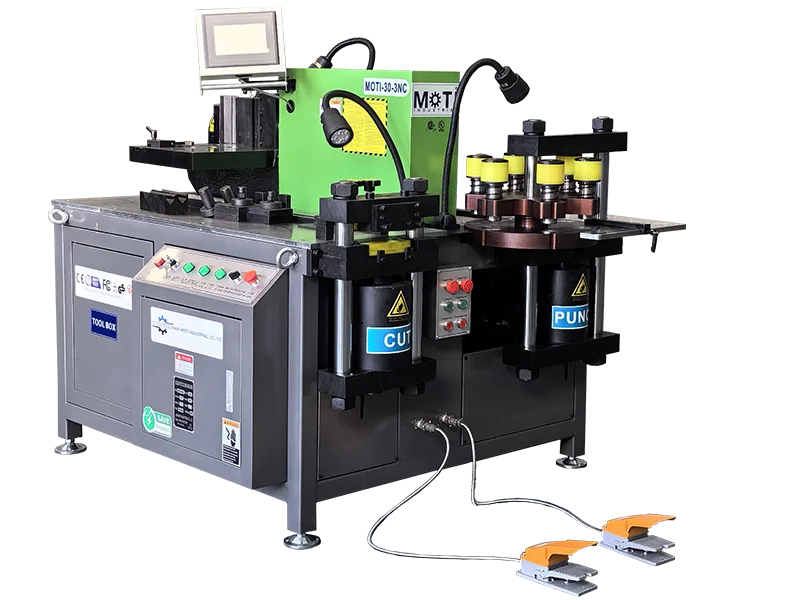
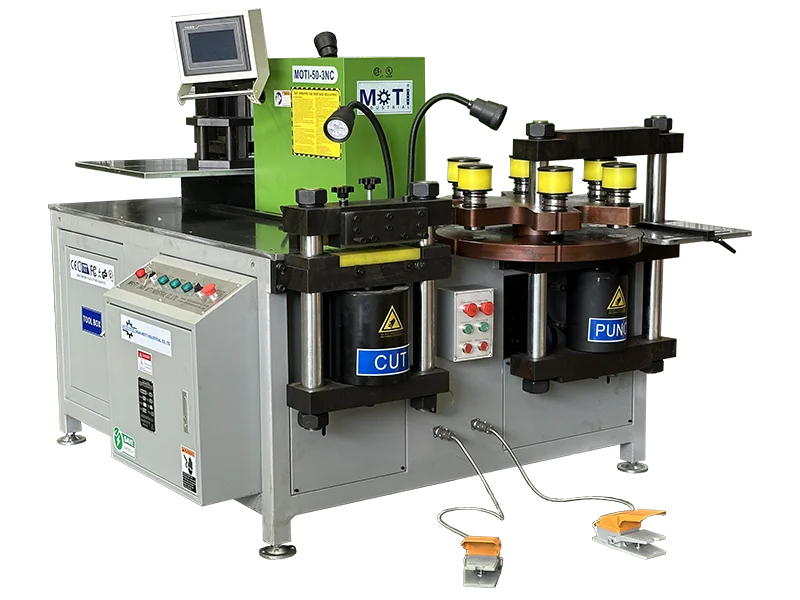
For a workshop that needs cutting, punching and bending, compare the standard 30-3NC, 50-3NC and 80-3NC ranges. Use the maximum thickness and width that occur together on an actual part, then check every operation.
When repeated positioning matters
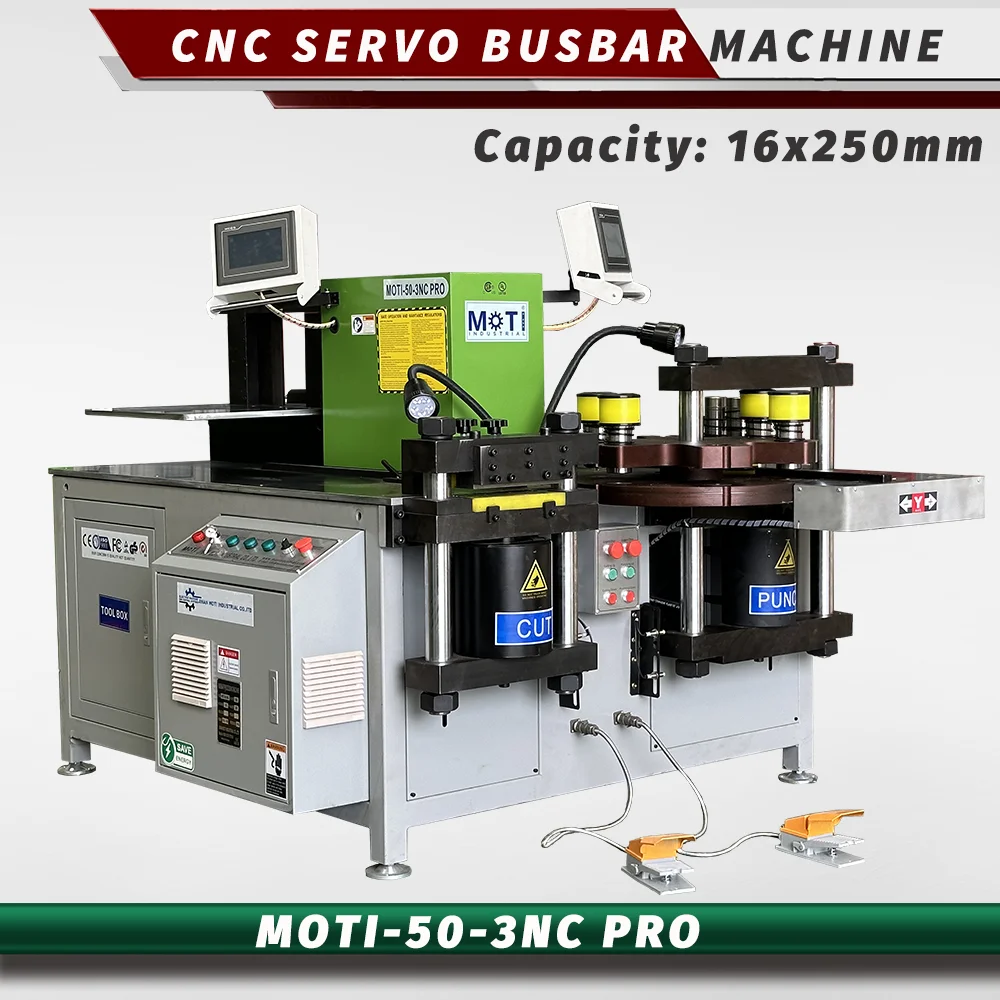
If operators spend substantial time resetting dimensions, review the 50-3NC PRO. Its four servo positioning axes address cutting, punching and bending gauges. It still requires workpiece handling, so compare the complete part cycle.
Bring a representative connection
Send a drawing with material, thickness, width, hole sizes, edge distances, bend directions and assembly references. Include daily quantity and your electrical supply. This gives MOTI a useful basis for discussing tooling and machine configuration.
From stock bar to cabinet connection
A typical fabrication route starts with cutting the blank, locating the connection holes and forming the bends needed to meet the assembly. The order may change with the part. Keep hole centers and bend positions referenced to the same drawing datum, and check how short flanges or a formed bend affect access to the next operation.
Match the tool set to the connection
Round holes, slots and breaker connections may need different tools even within one material size. Our HEMACK project shows why a dedicated connection tool can be part of the equipment discussion. Include the mating breaker or terminal drawing where it controls fit.
Organize operators and material flow
Three independent hydraulic workstations allow work to be organized in parallel. The useful layout includes access to each station, support for the longest bar and somewhere to place finished parts. If one operation dominates the job, discuss a different station mix or a separate machine.