Custom holes and forming tools
Include the hole profile, tolerances, material thickness, edge distances and machine interface. MOTI’s HEMACK project describes discussions around dedicated connection tooling and single-operation punching and bending tools.
A different mix of workstations
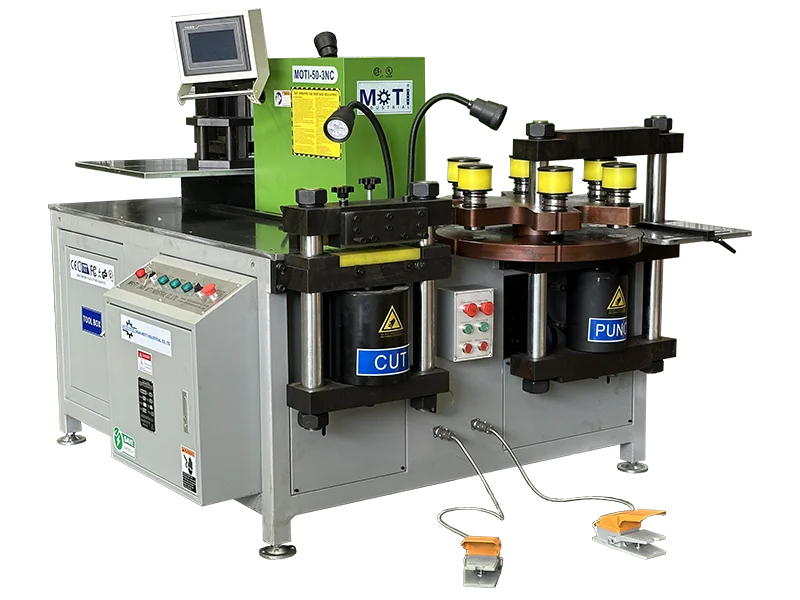
In an UAE project, MOTI documented a manually controlled configuration with two punching units and one cutting unit for 12 × 160 mm copper bars. Each punching unit used a six-die turret. This is an example of adapting the workstation mix to a process.
Define a useful trial
Agree on the drawing revision, material, tool set, inspection points and acceptance criteria. Compare loading, positioning, changing tools and checking the part as well as the cutting or punching stroke.
The interface matters as much as the shape
The HEMACK combined tool places a bending die below the punch and requires a custom-machined turret opening. A drawing-led tool proposal therefore needs the machine model and interface dimensions as well as the desired finished bar.
Make hole changes easier to evaluate
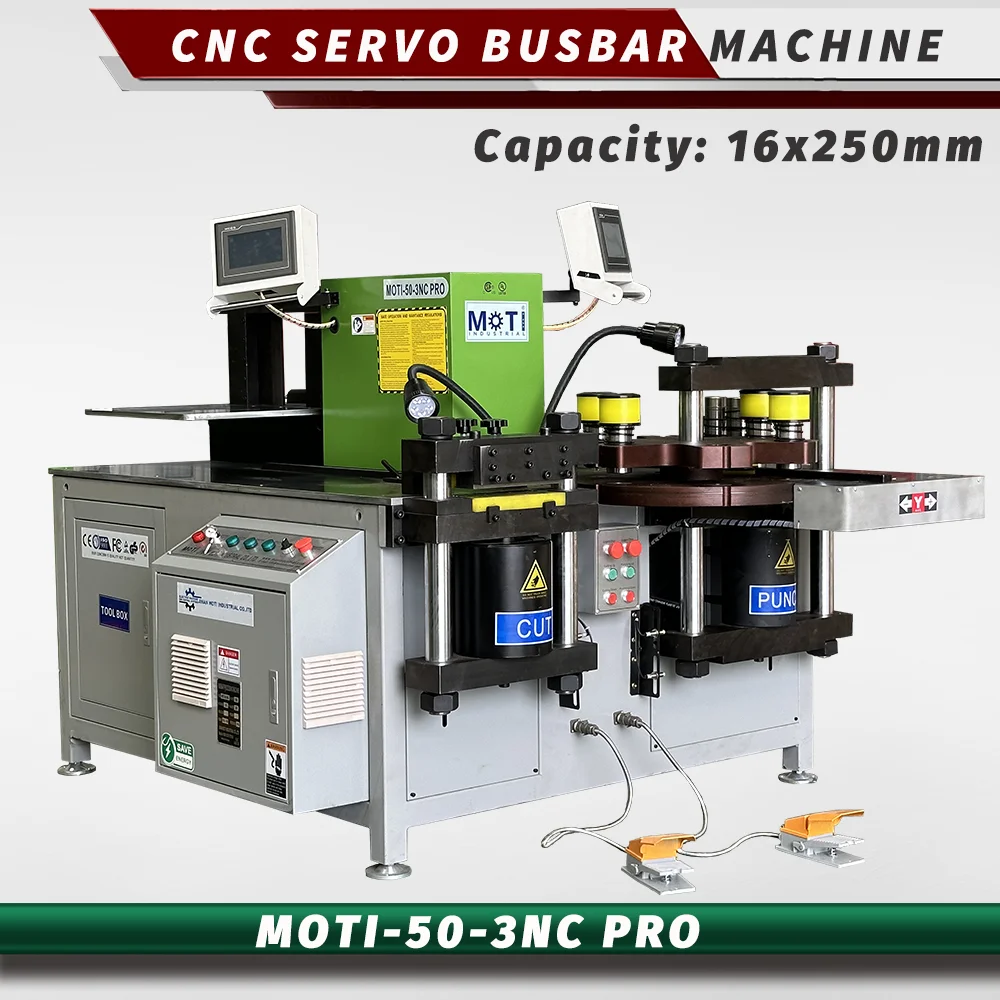
List the hole patterns you repeat and the tools used for each. A turret keeps several dies available; servo positioning assists the reference coordinates; a second punching workstation changes how work can be divided. Choose between them using your actual job mix.
Record the sample and tool together
Keep the drawing revision, material, tool identification and inspected dimensions with the approved sample. This creates a useful reference for repeat orders and future tool replacement.