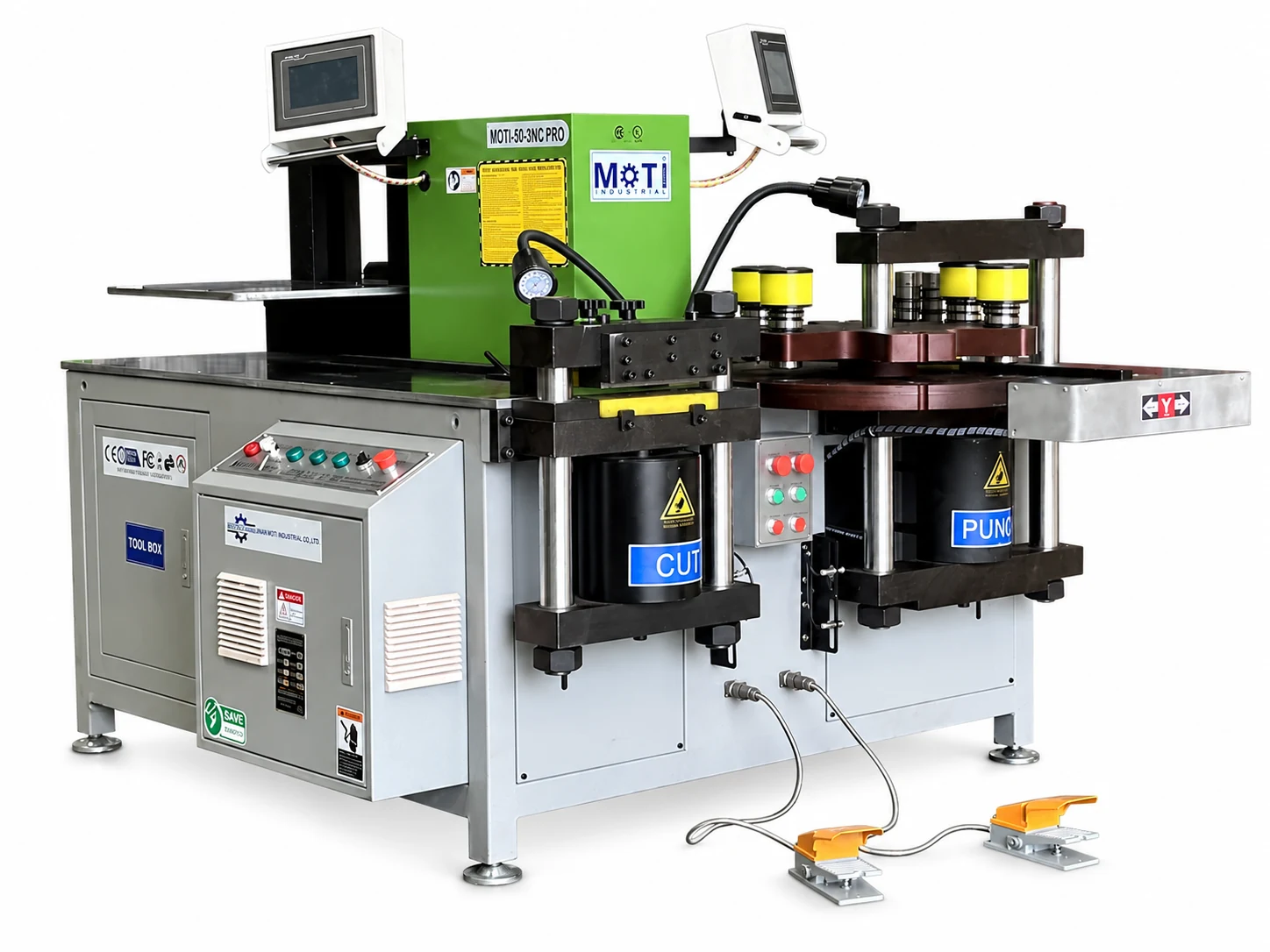
MOTI-30-3NC MAX Wide-format Busbar Processing Machine
More width in the 12 mm thickness class.
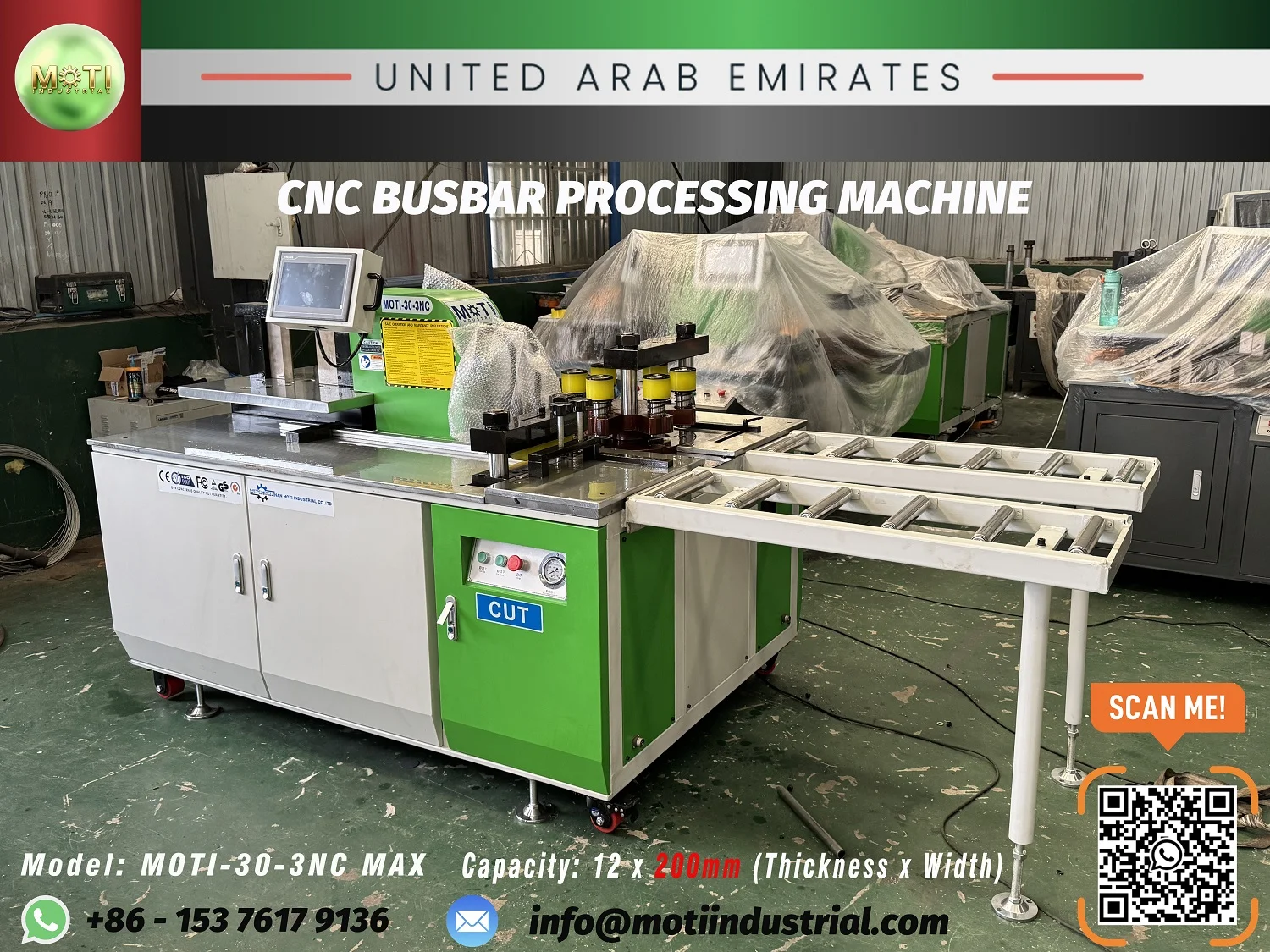
The 30-3NC MAX is documented in a MOTI delivery project for a customer requiring 12 mm thick, 200 mm wide copper busbars. It offers a separate selection path when you need additional width within the 12 mm thickness class.
More working width within the 12 mm thickness class.
The MOTI-30-3NC MAX was developed around a specific size requirement: a busbar wider than the standard 160 mm range, without moving above 12 mm thickness. The UAE delivery documents a 12 × 200 mm machine with cutting, punching and bending. It is a useful route for wider connections in electrical cabinets and distribution equipment. If your design also increases thickness, compare the 50-3NC or 80-3NC instead.
01 TECHNICAL OVERVIEW
Know the working range.
Compare these working limits with your part. Your quotation identifies the supplied machine version and tooling.
Machine specifications
Thickness × width
12 × 200 mm
Independent hydraulic systems
3
Before you choose
The headline capacity is an initial selection reference. Hole size, edge distance, bend direction and tooling can impose separate limits. Request a drawing review for your application.
Review the actual machine before shipment
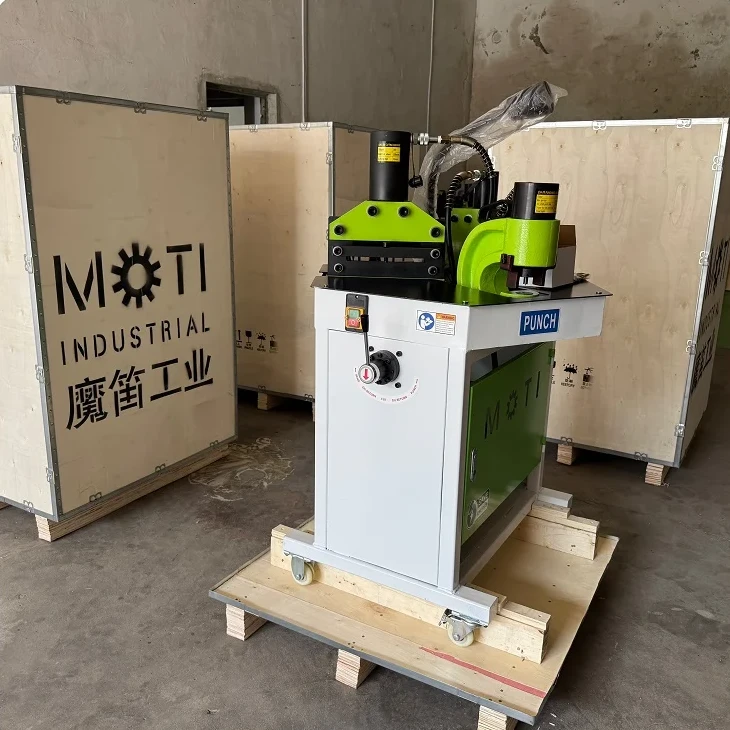
The UAE delivery report describes pre-shipment checks of the hydraulic system, CNC control, tooling and processing units, supported by machine photos and videos. Include your required hole set and bending tools in that review.
Equipment details, positioning and the workpiece requirements to discuss for this model.
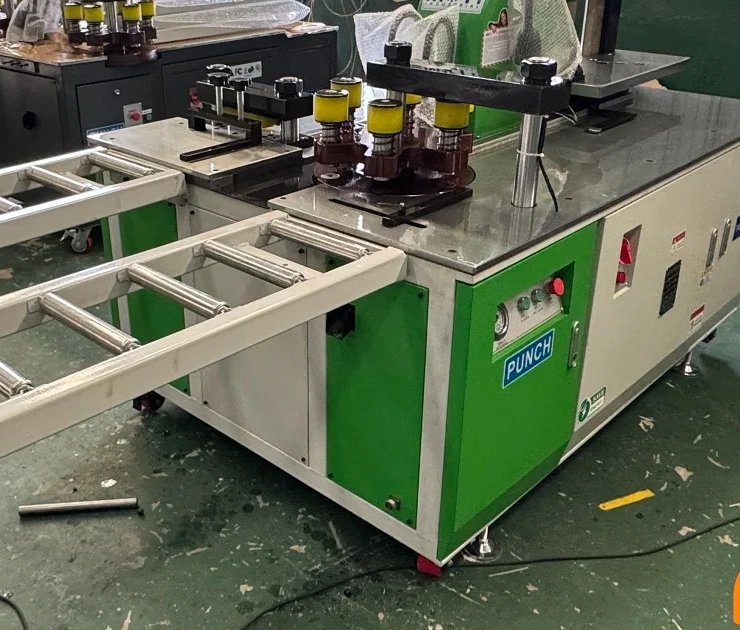
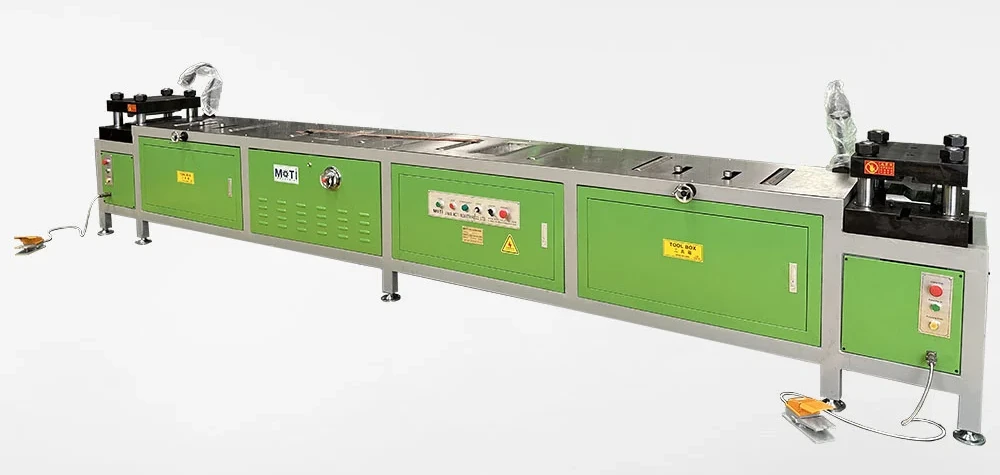
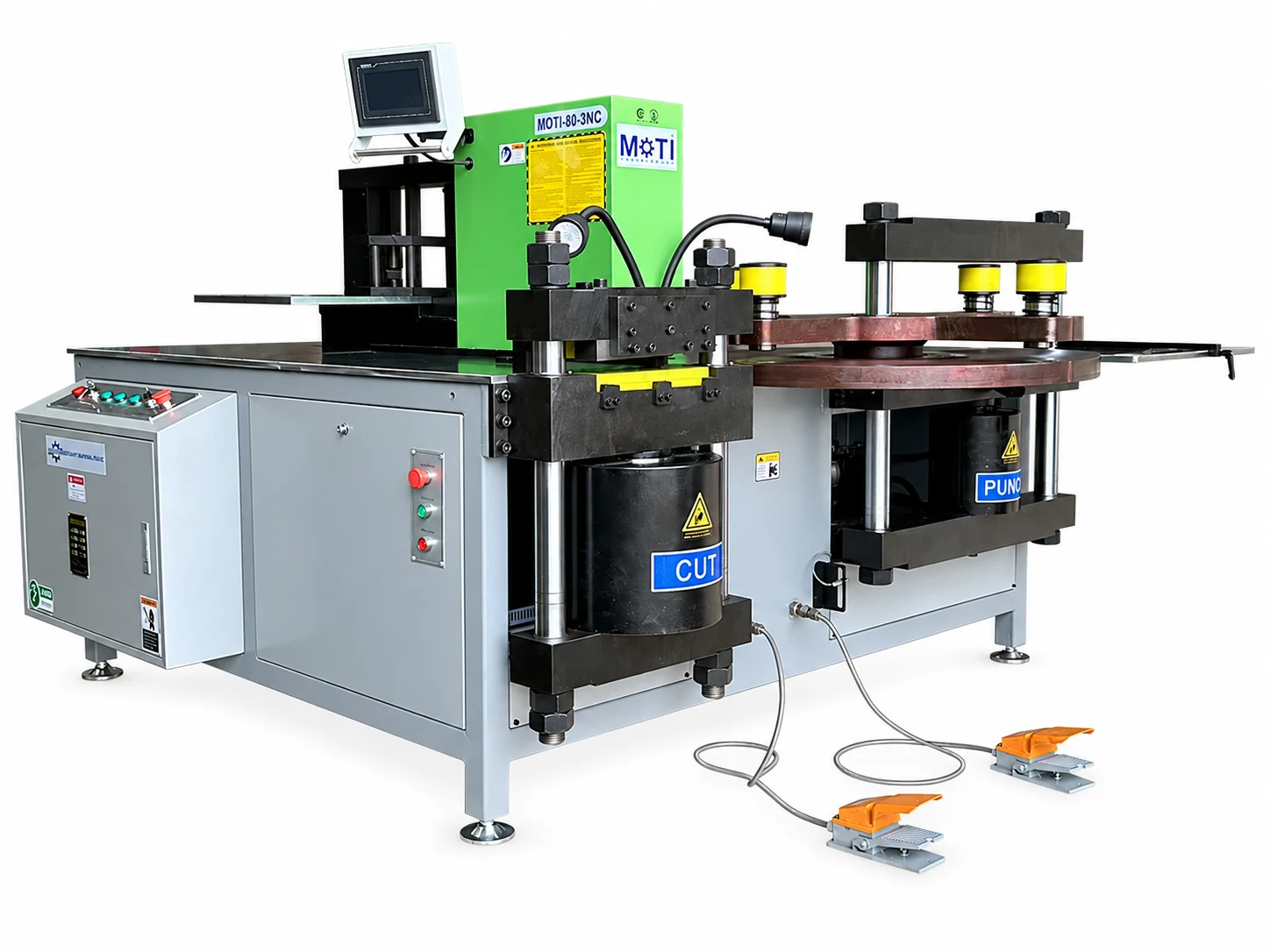
MOTI-30-3NC MAX with roller supports, prepared for the UAE shipment.
01
Three operations, independently powered
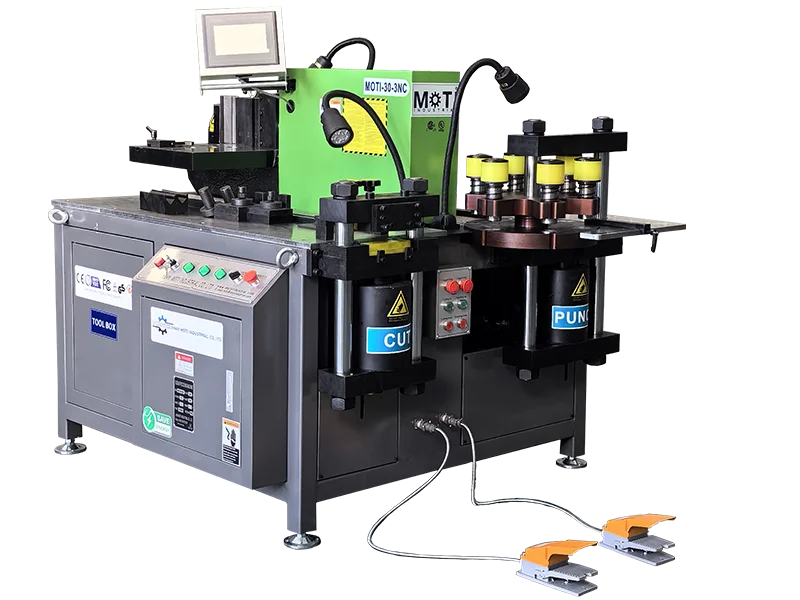
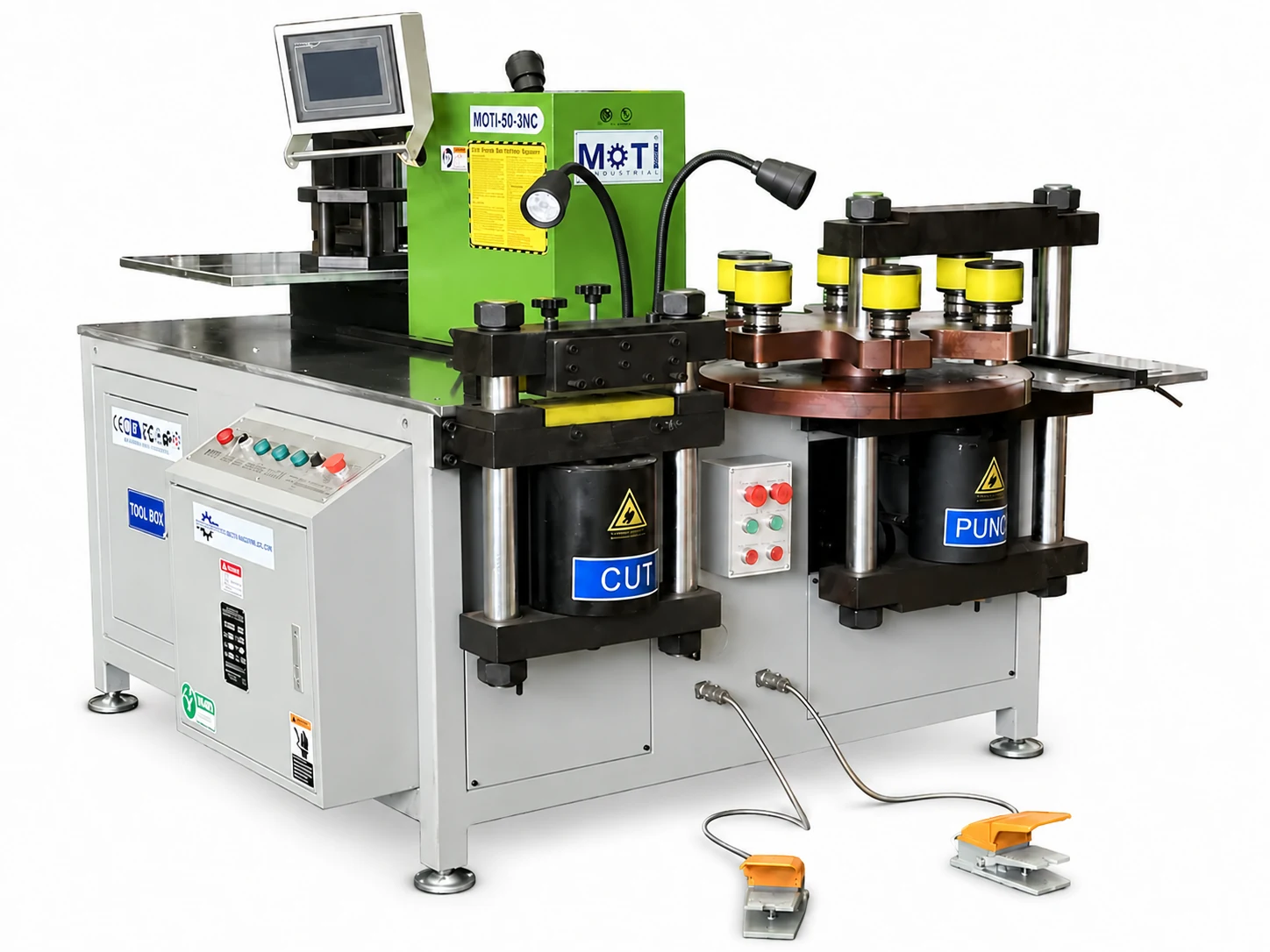
The MAX delivery describes three independent hydraulic systems for cutting, punching and bending. The workshop can organize work around the operations it repeats most. The configuration remains a three-process workstation, with operators responsible for workpiece handling.
02
Wider parts and the tool envelope
The delivery report describes punching with different hole shapes according to the tooling, hydraulic shearing and multiple bending forms. A 200 mm wide blank still needs its hole positions and bend orientation checked. Send the complete finished drawing so the tooling and available clearance can be reviewed.
03
A machine you can review before shipment
The MAX project describes pre-shipment checks of the hydraulic, control and processing systems, together with machine photographs and video for the customer. Define the part and measurement points you want included in your own inspection record.
03 TOOLS & FINISHED PARTS
Tooling, configuration and options
Quoted configuration: Define the cutting, punching and bending tool list for your 12 × 200 mm application, including each hole size and bend direction.
Options: Additional forming tools and material supports are reviewed for your part and workshop layout. The MAX tool package is specified for the order rather than assumed to match another 30-3NC version.
Punching tooling
Specify every hole shape and size in the quoted tool list. Match the punch and die to your material, thickness and turret interface.
Bending configuration
Discuss flat, edge, U/Z, twisting or embossing work from drawings. Each form requires a suitable tool.
Material support
Include stock length and working height in the layout discussion for wider bars.
Identify the material, drawing revision and finished-part dimensions. Select the required punch and bending tools, set the cutting reference and provide support for the full bar length. Use the operating manual for setup and tool changes.
02
Make and check the first part
Check cut length, hole centers and the finished bend against the drawing. Keep the same datum through successive operations. For a new material batch or tool, check the first bend before applying the setting to the rest of the order.
03
Organize the repeat work
The three independent hydraulic workstations allow cutting, punching and bending to be organized in parallel. Plan the operators’ working areas, part transfer and material supports. Actual output depends on the whole job, including loading, positioning and inspection.
Do not assume that. The MAX project confirms the 12 × 200 mm range and independent systems; the final machine dimensions, power and accessory list should be stated for the supplied MAX configuration.
The UAE project includes photographs of the supplied machine and explains the wider-busbar requirement. Follow the linked case below to see that configuration.
Share your material, maximum thickness and width, and the cutting, punching or bending work you need. A drawing or a sample requirement helps us discuss the right machine and tooling.
We use your details to respond to your machine enquiry. For drawings, use the email or WhatsApp links below.
Have a drawing? Attach your PDF, CAD file or clear part photo in email or WhatsApp. Include material, thickness, width and quantity.