1. Specify the material and the real size combination
Record the material grade and condition, thickness, width and stock length. State whether the maximum thickness and width occur on the same part. Do not use a copper rating as a guarantee for another material.
2. Check each operation
List hole shapes and sizes, edge distances, cut length and bend directions. Check punch tooling and short-flange clearances. Main-direction capacity is not automatically edge-bending capacity.
3. Match the positioning assistance
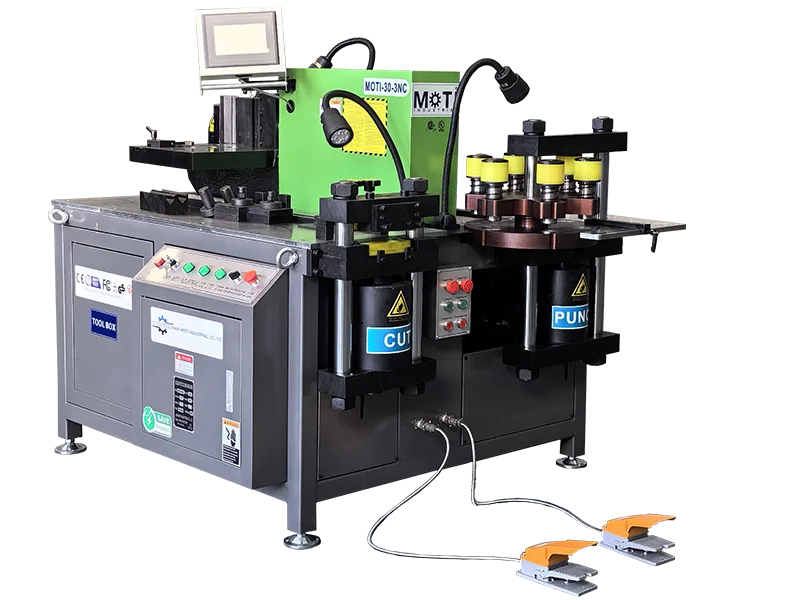
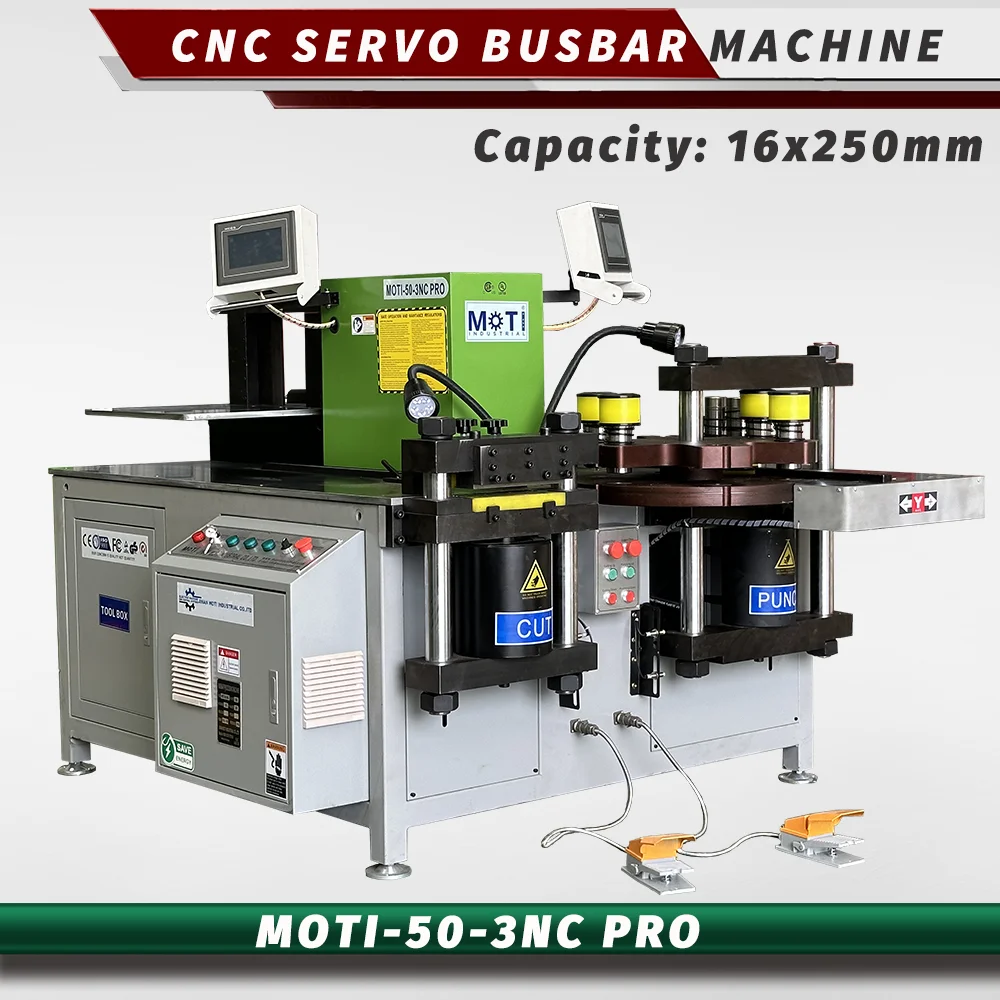
Standard 3-in-1 machines combine the three processes at a workstation. The 50-3NC PRO adds four servo positioning axes. A dedicated CNC bending center is a separate route for bending; it does not also punch and cut.
4. Compare a finished-part cycle
Measure loading, positioning, tool changes, operation time, transfer and inspection. A machine’s punching strokes per minute do not equal finished parts per hour. Ask for a representative trial where this affects your decision.
5. Make quotations comparable
Ask suppliers to list the machine configuration, included dies, optional tools, electrical supply, manuals, installation scope, packing, delivery terms and warranty conditions. A quote for a bare machine cannot be compared directly with a complete tooling and service package.
A worked selection example: width or thickness?
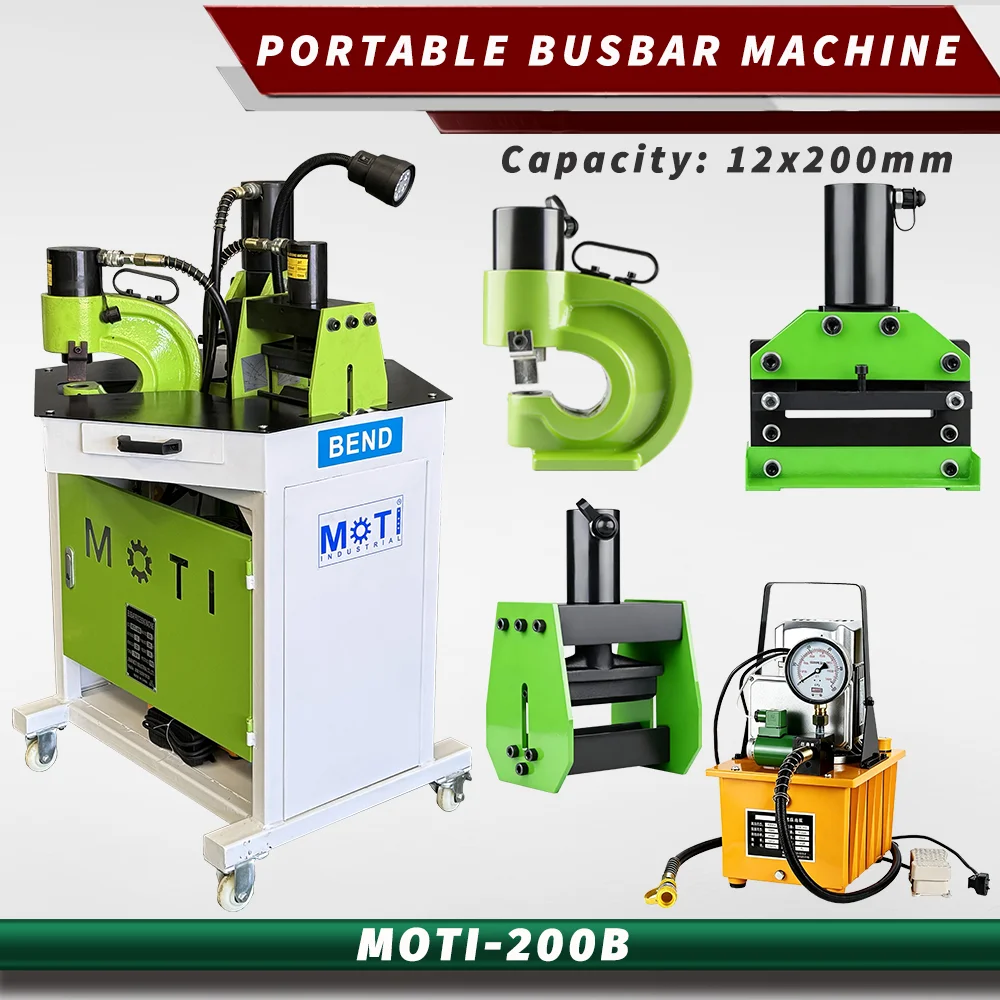
A 12 × 200 mm copper bar points toward a different comparison from a 16 × 200 mm bar. The first can lead to a MAX workstation or a 200B arrangement, depending on the work location and process. The second is beyond the 12 mm thickness class, so begin with a 50-3NC-class review. In both cases the hole and bend details still determine tooling.
Bending-only work is a different decision
An NC.40Z center is a dedicated bending stage with a software workflow; the 600B focuses on paired end forms for busduct connections. Neither should be selected as a substitute for a three-process workstation if you also need cutting and punching on that machine.
Use the same inquiry brief for every quotation
Attach a typical drawing and your most demanding part, with material, quantity, tolerances and power supply. Ask each supplier to identify the exact configuration and the operations still performed by the operator. This makes demonstrations and commercial offers easier to compare.