
By MOTI Industrial · 9 September 2026
A busbar machine’s cycle time is useful only when the start point, finish point and workpiece are defined. For a purchasing decision, measure the time needed to produce acceptable parts from a representative drawing. Keep setup, operator handling, inspection and rework visible. A short video of one punching stroke cannot establish the output of your workshop.
This guide provides a way to organize a production trial. It does not assign a guaranteed output to a MOTI model or replace the acceptance criteria agreed for an order.
Start with a part that represents your workload
Choose a drawing that the workshop makes regularly, then add a demanding part that could expose a limitation. A straight bar with repeated holes tells you little about the handling needed for a long, formed part. Record the drawing revision, material grade and condition, thickness, width, starting length, hole pattern and bend geometry. Identify the dimensions that matter for assembly.
Agree on the supplied machine, positioning options, tooling and support arrangement before comparing demonstrations. If two trials use different operators, material supports or programs, record that difference. A machine that fits the catalogue dimensions still needs to complete the required sequence. The busbar machine selection guide explains the workpiece information to prepare before choosing a configuration.
Use three separate timing records
Keep the following records separate so a fast repeat run does not hide a long changeover.
| Timing record | What to include | What it helps you decide |
|---|---|---|
| Setup to accepted first part | Program preparation or recall, tooling changes, positioning adjustments, trial parts and first-piece checks. | How much preparation a new drawing or batch requires. |
| Repeat production | Loading, positioning, processing, movement between stations, unloading and the inspection agreed for the run. | How the configuration handles repeated parts after setup is complete. |
| Complete batch | Setup plus the whole observed batch, including recorded interruptions, rejected parts and rework. | Whether the result is relevant to your batch sizes and delivery requirements. |
Decide the timing boundaries before the trial starts. For example, if material preparation happens outside the observed run, identify it as an excluded activity. Do the same for drawing preparation and final assembly inspection. Exclusions can be reasonable; they must be visible to everyone comparing the results.
Follow the workpiece through the complete process
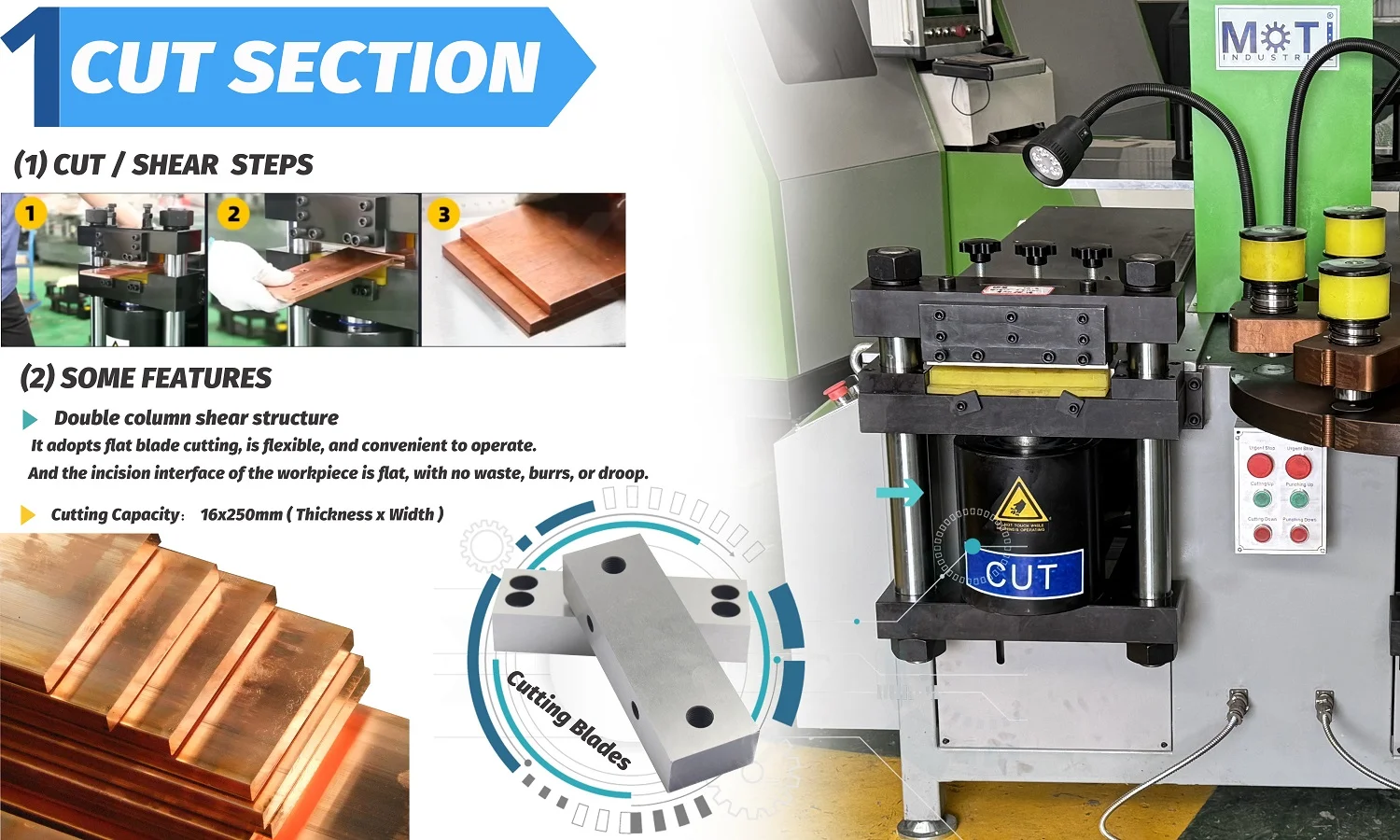
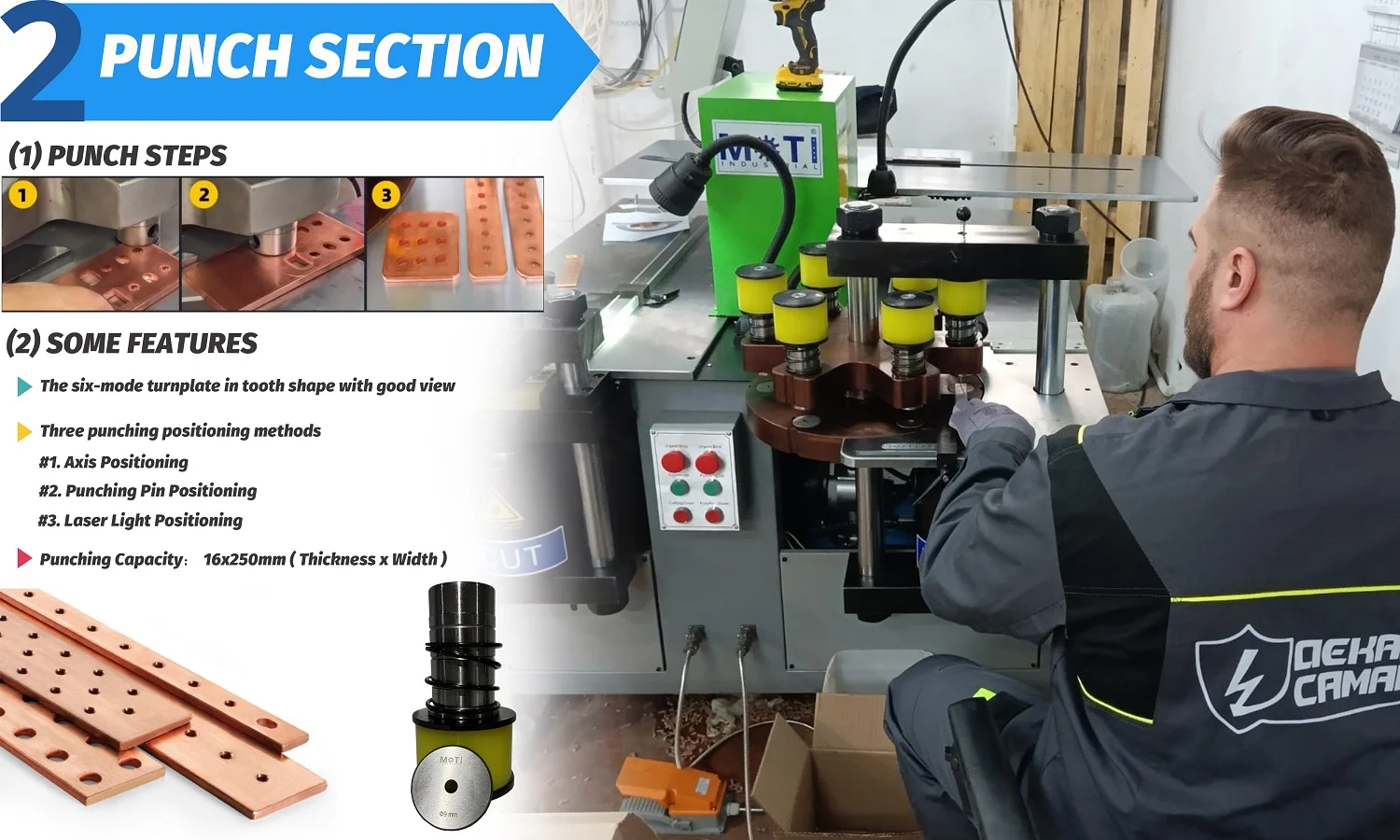
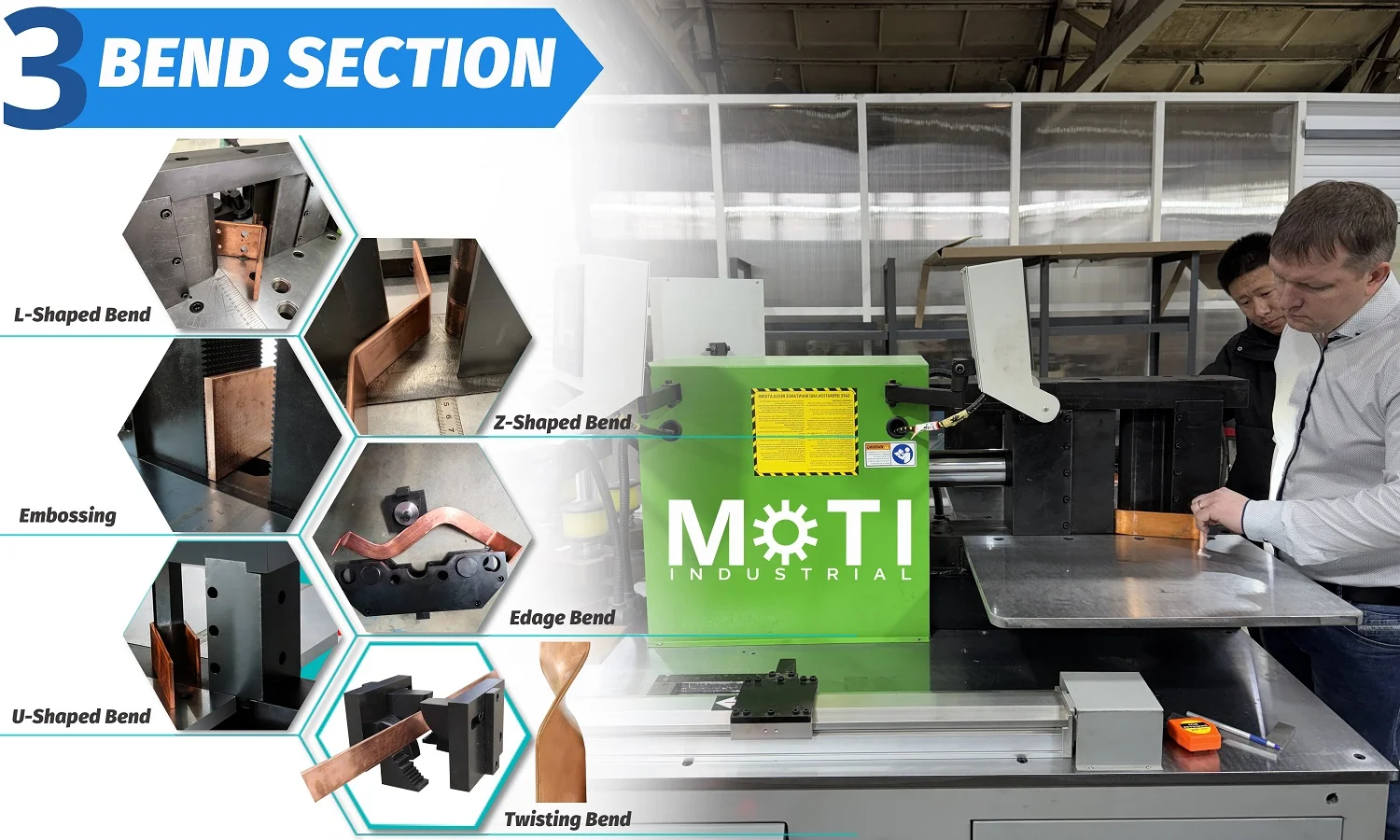
At cutting, observe how the operator positions the stock and handles the cut piece. At punching, include the moves between hole positions and any tool selection or change. At bending, follow positioning, part rotation, support, removal and checking. Ask where the part waits and what the operator must do before the next operation can begin.
The MOTI-50-3NC workstation has cutting, punching and bending sections. MOTI’s published product material also describes multi-operator use of its separate stations. That description does not provide a verified output for your drawing. A trial should show the actual staffing, station allocation and material flow proposed for your workshop. The original MOTI-50-3NC product reference identifies the equipment features used in this example.
If several operators work at the same time, measure both elapsed batch time and the staffing involved. Adding together overlapping station times is not the elapsed time of the line. Conversely, a short elapsed run does not show how much operator time it required. These are different planning questions.
Count accepted parts, and keep the rejects in the record
Set the inspection method and acceptance criteria from the drawing and purchasing agreement. Do not substitute a generic tolerance for the dimensions your assembly needs. Record the measured results, the measuring method and whether each checked part passed. Identify any correction or repeat operation that was needed.
For an observed batch, a useful descriptive measure is total elapsed minutes divided by the number of accepted parts. Label it as an observed batch average and state whether setup and rework are included. If no parts meet the agreed criteria, there is no accepted-part rate to report. Do not remove failed parts from the timing record while keeping only the successful output.
This calculation describes the trial you observed. It is not a guaranteed shift output. Changes in the part mix, batch size, staffing, material supply or inspection requirements can change the result. Use your own production conditions when assessing whether the trial is representative.
Test the changeover that happens in your workshop
Repeat production is only part of the decision when a workshop makes many different drawings. Ask for a change from one representative part to another. Record the tools changed, adjustments made, program work and checks required before the next accepted first part. Keep the sequence visible in an uninterrupted recording when practical.
Positioning assistance should be assessed at the operations where it is actually used. The comparison of standard and servo busbar machines separates positioning functions from the handling that remains. Use that distinction to write a test question, such as whether a repeated hole pattern needs the same manual adjustments after a drawing change. The demonstration should answer the question for the proposed configuration.
Keep a record you can compare later
A useful trial record contains the machine and configuration, software or program version where relevant, drawing revision, material batch, tool identifiers, operator count, timing boundaries, setup time, observed batch time, accepted quantity, inspection results and interruptions. Link the record to the corresponding photographs or video. Note which parts of the proposed supply were not demonstrated.
Separate an informal equipment demonstration from an agreed acceptance test. One successful sample does not establish performance for materials, shapes or tooling that were not tested. The tooling and sample preparation guide can help you assemble the drawing and tooling questions before the trial.
What to send MOTI before discussing output
Send a representative drawing, material and dimensions, usual batch sizes, the operations that currently cause delays, and the equipment or process you are comparing. Identify whether the priority is shorter changeovers, repeated positioning, a particular forming operation or moving material between stations. We can then discuss a suitable demonstration and the information to record.
Discuss a production trial with MOTI. Ask for the test scope and proposed configuration to be written down before treating a demonstration as evidence for your purchasing decision.